

ONE QNAP, MULTIPLE SERVERS AT THE SAME TIME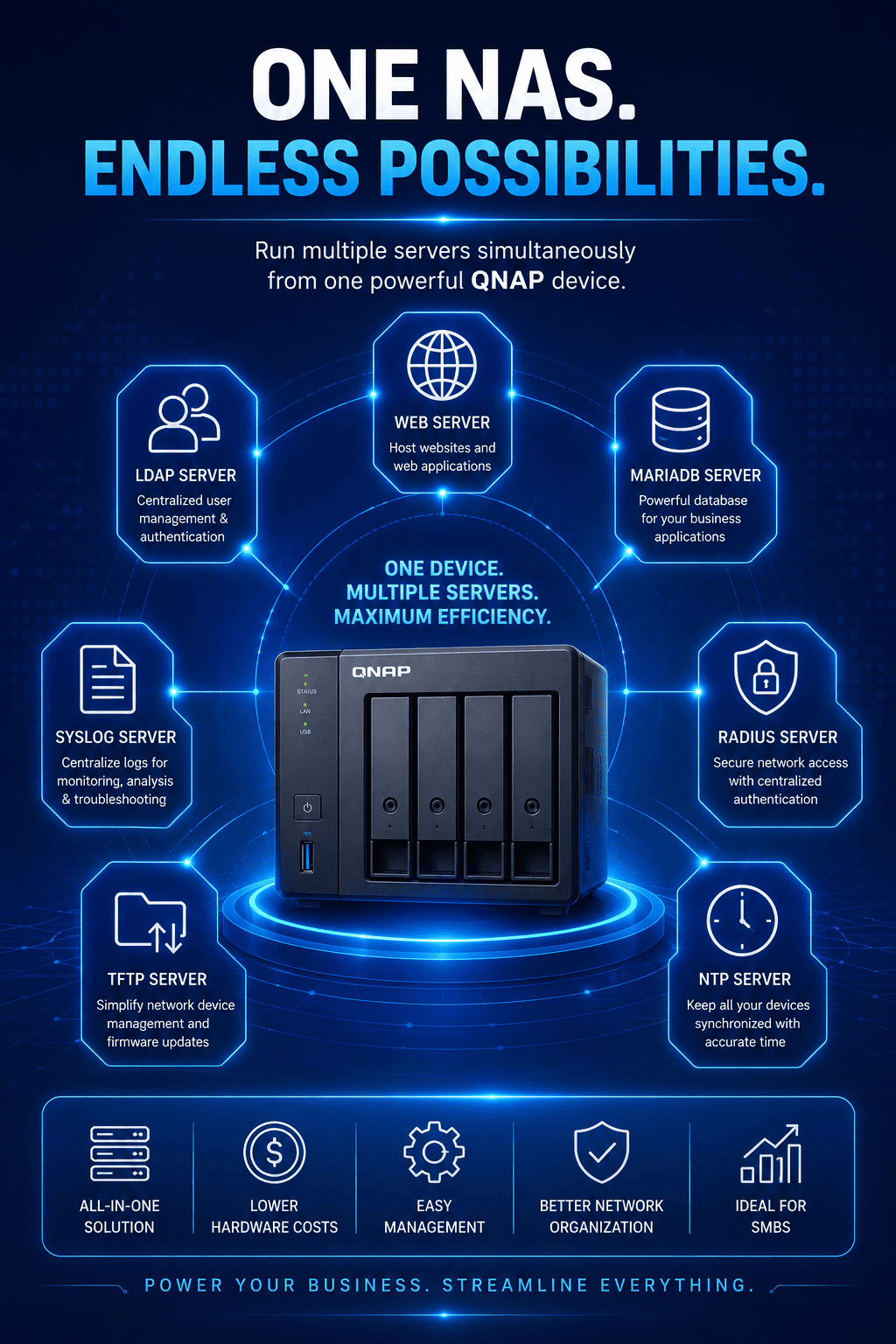
Instead of buying many separate servers, businesses can use one QNAP NAS
A QNAP NAS (QNAP) IS NOT LIMITED TO ONE SERVICE ONLY. It can run multiple servers simultaneously
Such as:
• Web Server
• LDAP Server
• MariaDB Server
• Syslog Server
• RADIUS Server
• TFTP Server
• NTP Server
THAT MEANS: This means one QNAP device can handle:
Websites
User authentication
Databases
System logs
Network security
File transfers
Time synchronization
Web Server Applications : QNAP Web Server can be used for:
1) Company websites
2) Internal employee portals
3) Test environments for developers
4) Hosting small web applications
Example: Hosting a WordPress company website directly on QNAP.
LDAP Server Applications
QNAP LDAP Server helps manage users in:
1) Offices
2) Schools
3) Organizations IT departments
Example: Employees use one username and password for multiple systems.
MariaDB Server Applications MariaDB on QNAP is commonly used for:
1) WordPress databases
2) Inventory systems
3) CRM applications
4) Business management software
Example: Storing customer and website data securely.
Syslog Server Applications:
Syslog Server is useful for:
1) Monitoring network devices
2) Tracking firewall activity
3) Detecting errors
4) Troubleshooting issues
Example: Collecting logs from switches, routers, and servers in one place.
RADIUS Server Applications RADIUS Server is mainly used for:
1) Company Wi-Fi authentication
2) VPN login security
3) Enterprise user access control
Example: Storing customer and website data securely.
FTP Server Applications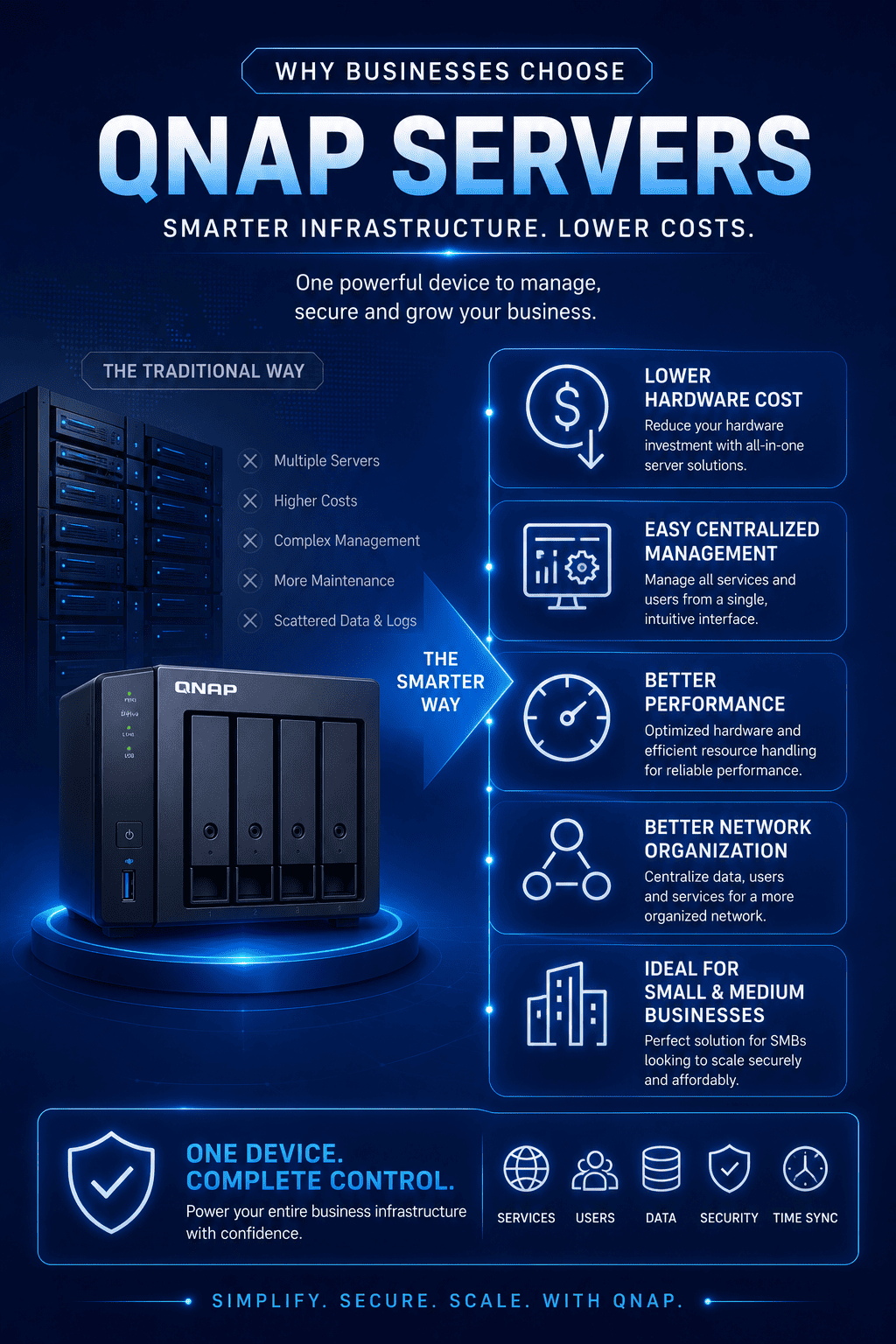
TFTP Server helps network administrators with:
1) Router configuration backups
2) Firmware upgrades
3) PXE network booting
4) Switch configuration transfers
Example: Updating firmware on multiple network devices quickly
NTP Server Applications
NTP Server is important for:
1) Security systems
2) CCTV recording accuracy
3) Server synchronization
4) Correct event logging
Example: Keeping all company devices on the same exact time.
Why Businesses Use QNAP Servers ?
1) Multiple services in one device
2) Lower hardware costs
3) Easy centralized management
4) Better network organization
5) Ideal for small and medium businesses
Example: Keeping all company devices on the same exact time.